The AI Request Process
The AI Request Process is designed to help strengthen ideas. Whether you want to build something yourself or partner with the AI Team, the process helps ensure AI tools provide meaningful value for students, faculty, and staff.
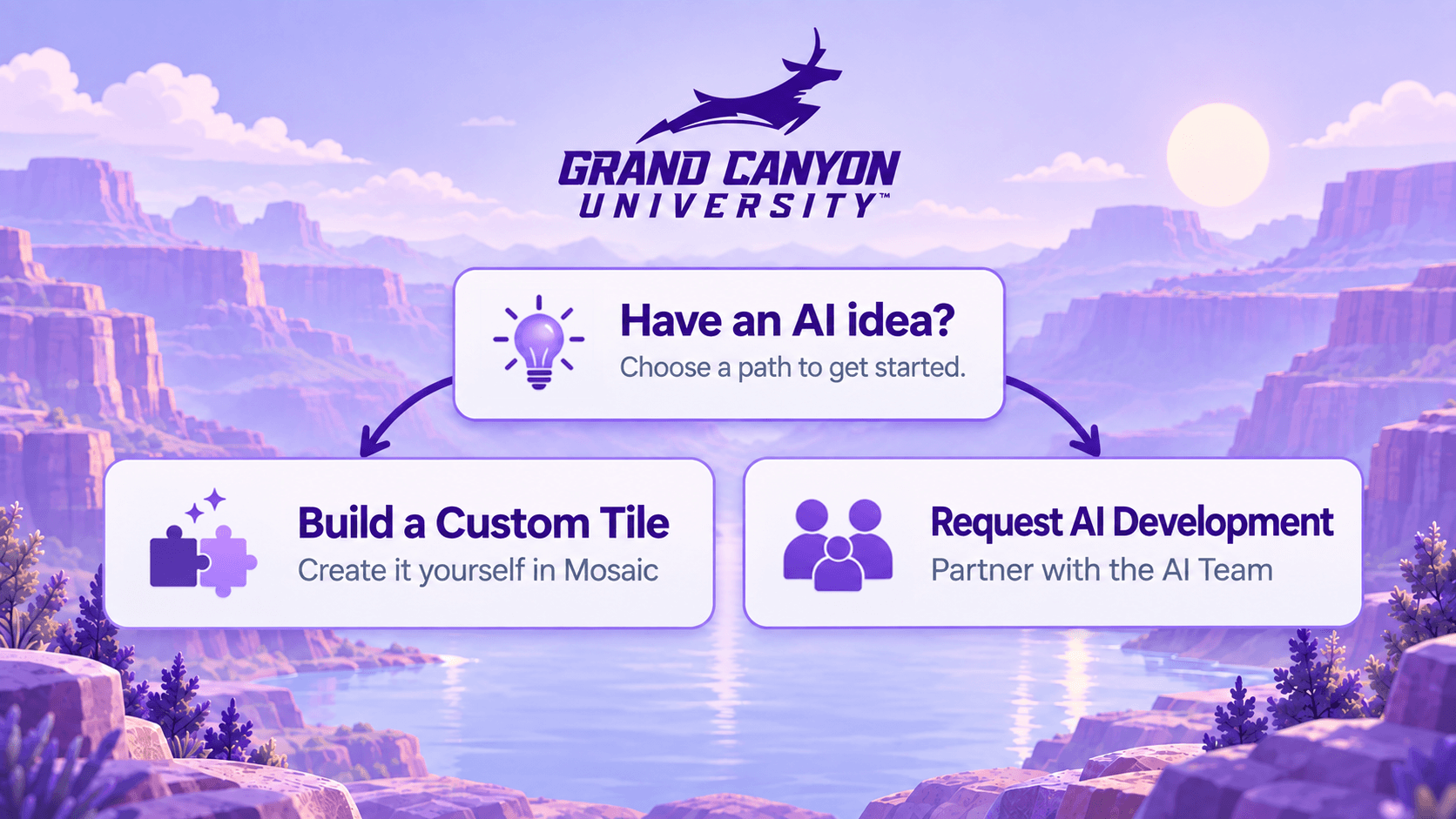
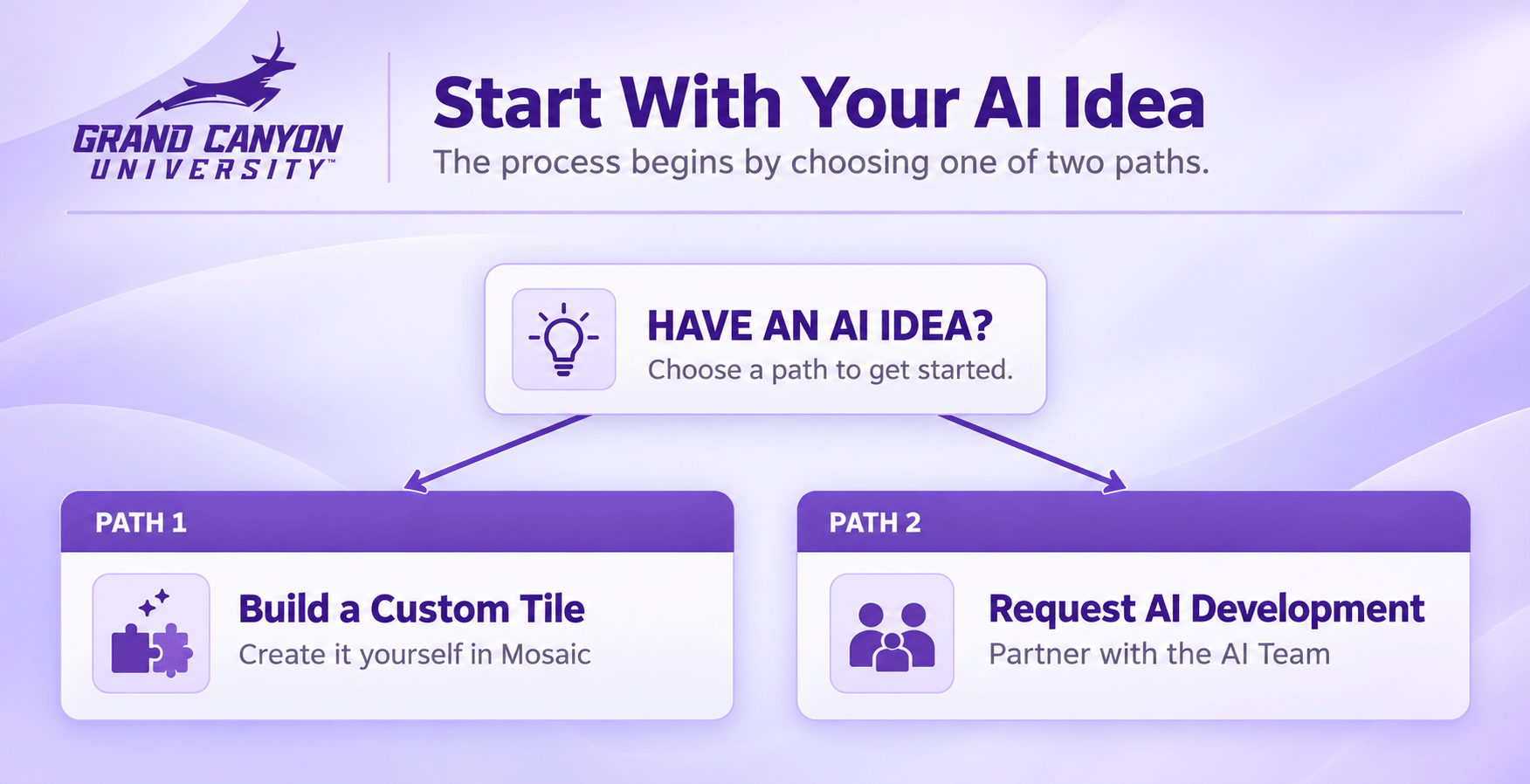
There are two ways to get started: build a custom tile in Mosaic or request AI development from the AI Team.
Path 1: Build a Custom Tile
If you want to create your own AI tile, you can build it directly in the Mosaic platform with Custom Tiles. Start by defining its purpose, instructions, and knowledge sources. Then, test the tile by asking questions, reviewing its answers, and refining it until the results are accurate and helpful.
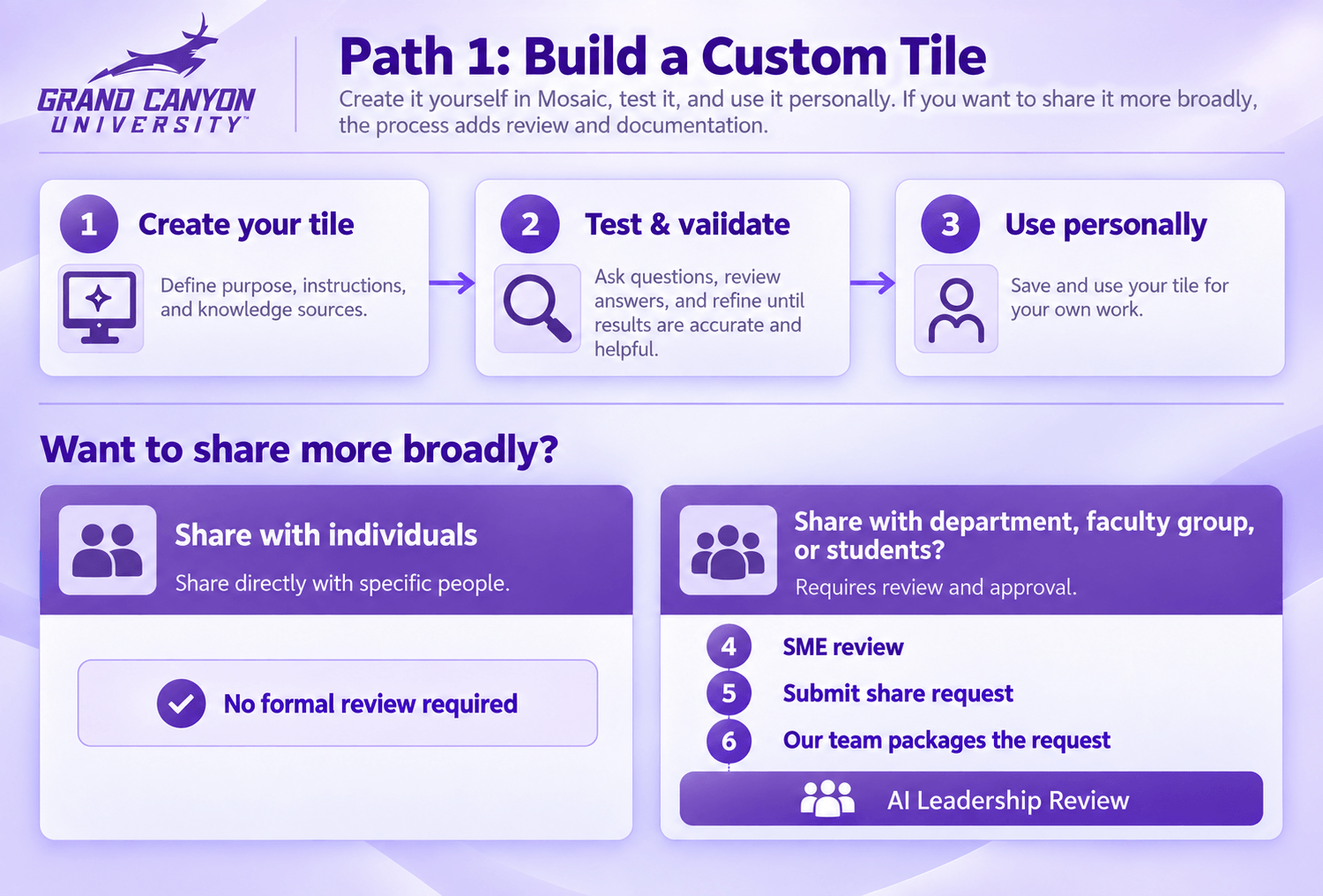
If you want to share the tile with specific individuals, no formal review is required.
Sharing with a department, faculty group, or students requires additional review and approval. Subject Matter Experts (SME) are required to review the content, accuracy, and appropriateness. You then submit a share request; we package the request in a Statement of Work (SOW), and we take it to AI Leadership for Review.
Path 2: Request AI Development
For ideas that require support from the AI Team, begin by submitting a request through the AI Services website.
A Project Analyst will contact you to better understand the goals, audience, and expected outcomes. The project is documented in a Statement of Work before the AI Team evaluates technical feasibility and resource needs. The request then moves to AI Leadership Review and Prioritization. Requests are considered based on their impact on students, faculty, operations, strategic alignment, available resources, and feasibility and risk.
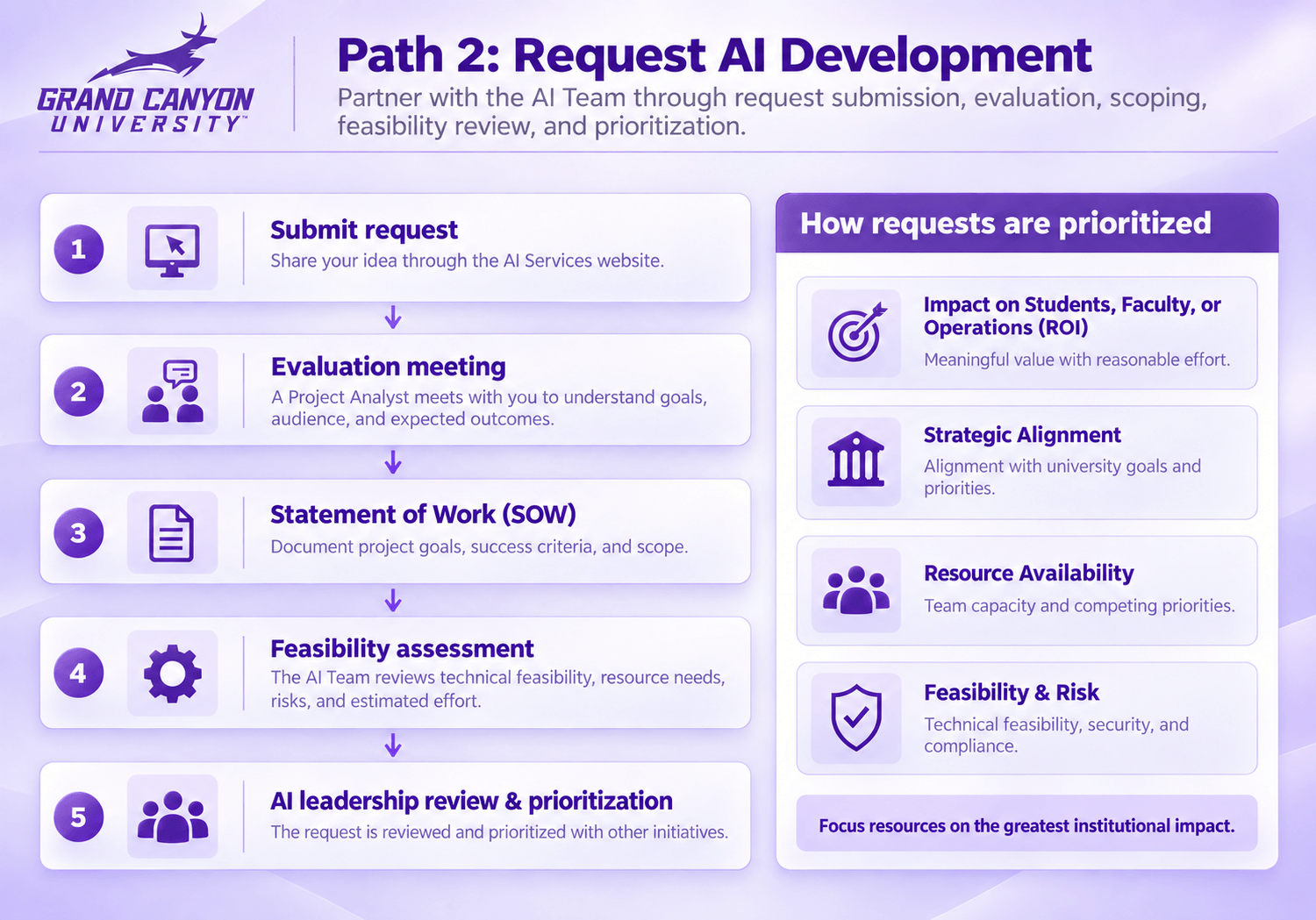
Requests are considered based on their impact on students, faculty, or operations; strategic alignment; available resources; and feasibility and risk.
AI Leadership Review, Pilot, and Release
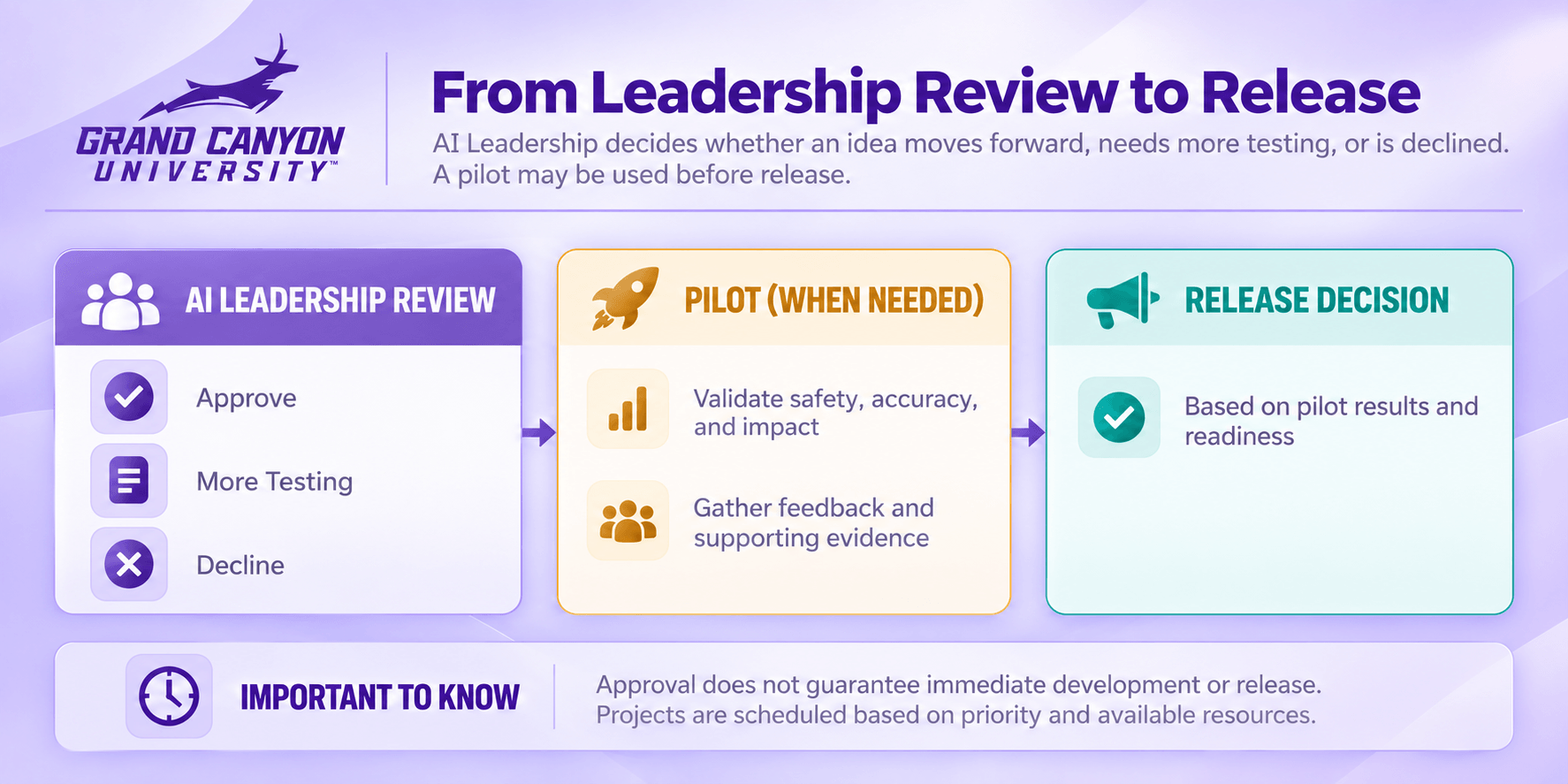
AI Leadership provides guidance and determines whether an idea is approved or needs more testing. Approval does not guarantee immediate development or release. Projects are scheduled according to priority and available resources.
When additional testing is needed, a pilot may be used to test safety, accuracy, and impact while gathering feedback supporting evidence or suggested improvements.
Final Outcome: Deployment
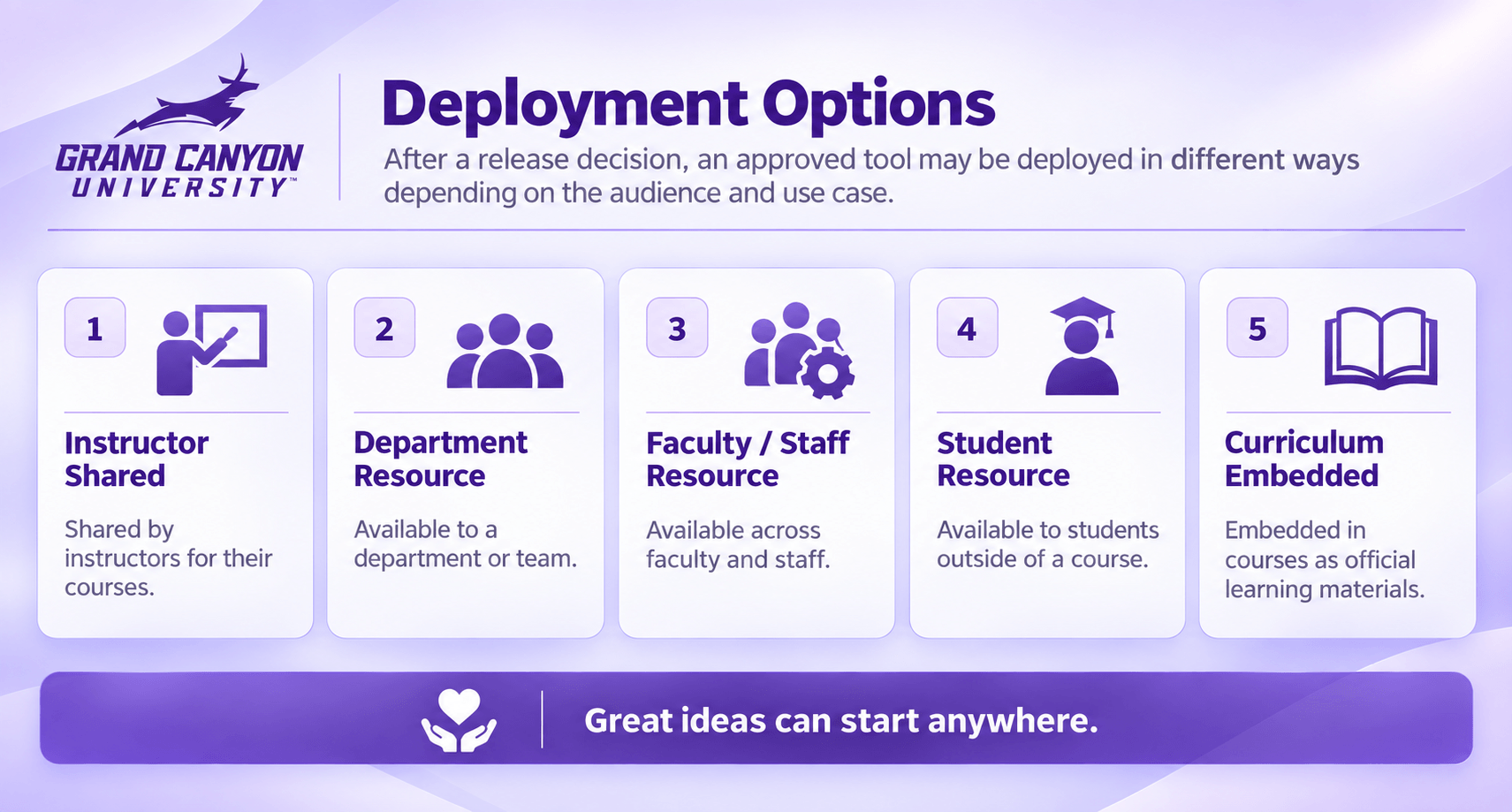
Once a tool is ready for release, it can be made available in different ways depending on its audience and purpose.
Conclusion
Great ideas can start anywhere. Whether you build a custom tile yourself or work with the AI Team, the AI Request Process provides a clear path for evaluating, strengthening, testing, and ultimately delivering AI tools to the right audience.